What is asbestos?
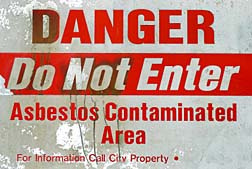 Asbestos is a highly fibrous mineral that is found nearly worldwide. The most common forms of asbestos are Chrysotile (white), Amosite (brown) and Crocidolite (blue). Its heat-resistant and fire-retardant properties, along with its binding qualities, versitality and cost-effectiveness, made it popular in insulation, drywall tape, gaskets, brake shoes, certain household products, numerous other products.
Must asbestos be removed and who should remove it?
If properly managed, asbestos can remain in its original place. The danger occurs when asbestos is not properly removed or the materials become damaged. Microscopic asbestos particles can then become airborne and the fibers inhaled into the respiratory system, which can cause serious health problems. Only a licensed asbestos removal contractor should remove asbestos materials. Typically, when asbestos is in the process of being removed, it is referred to as "asbestos abatement" or simply "abatement".
What diseases are caused by asbestos exposure?
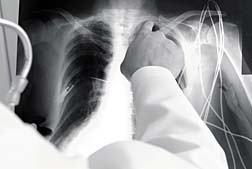 Once asbestos fibers accumulate in the lungs, several diseases may occur. Asbestos disease falls into two basic categories:
- Cancerous: Some diseases are malignant (or cancerous), such as mesothelioma and lung cancer.
- Non-Cancerous: Others are benign (non-malignant or non-cancerous), such as asbestosis, pleural plaques, diffuse pleural fibrosis, and benign pleural effusions. Asbestosis and mesothelioma often exist without any symptoms, and are only detected when x-rays and CT scans reveal scarring and thickening of lung tissue. Both diseases are life-threatening and incurable. According to the National Cancer Institute, it can take 10 to 40 years or more for symptoms of asbestos disease to appear.
Asbestosis develops over time as asbestos fibers begin to cause inflammation in the lungs, which leads to the development of scar tissue (fibrosis). The most common symptom of asbestosis is shortness of breath or a feeling of breathlessness. Asbestosis disease causes scarring of the parenchymal tissue of the lung; it decreases the lung's ability to exchange oxygen and carbon dioxide in the blood through a reduction in total lung capacity. It is a slowly progressive disease. The latency period (i.e. the time between initial exposure and the onset of the disease) of 15 to 30 years.
What is mesothelioma?
Mesothelioma is a cancer in which cells in the lining of the chest or abdominal cavities divide without control or order, invading and damaging nearby tissues and organs. Cancer cells can also spread from their original site to other parts of the body. Mesothelioma is almost always fatal. Victims typically die within one or two years of diagnosis. It has a long latency period of 30 to 40 years.
Who is at risk for asbestos-related disease?
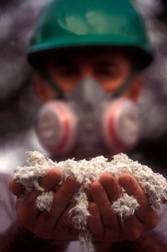 Those most likely to be exposed to asbestos are people who work in building and maintenance trades, and, to a lesser extent, those involved in asbestos removal (where risks exist unless rigorous precautions are taken). Because asbestos was so widely used until the 1970s in so many applications, it can still be found in products and buildings. Workers who renovate buildings with asbestos can inhale the fibers, and their families can be exposed to fibers on their work clothing.Residents in high-risk areas are also at risk. A number of sites in the US, such as Portland Harbor,Libby Mine and Hanford Mine, have been designated as Superfund sites because the surrounding environment contains high levels of dangerous contaminants. A Superfund site puts area residents at risk for disease as well as loss of property value due to environmental damage.
What should I do if I think I have been exposed to asbestos fibers?
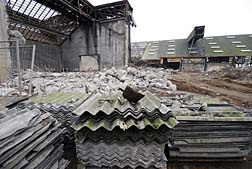 First and foremost, contact your doctor and demand a lung function test and high resolution CT scan, which can detect changes in the lungs caused by asbestos. Unfortunately these changes usually are not detectable until years after exposure. A chest x-ray can detect early signs of certain lung diseases, but it cannot show asbestos fibers.
 If you are concerned about asbestos in your home, call a licensed asbestos removal company to test your air quality. A licensed asbestos removal company can also advise you on whether it is best to have the asbestos professionally removed or to leave it in place untouched. Because the risk of asbestos exposure is highest when the asbestos particles are disturbed or airborne, it is sometimes best not to remove them. Call an experienced asbestos attorney: the laws regarding asbestos exposure and mesothelioma claims are complex and differ state-to-state.
What is the government doing about asbestos use?
Although the US has never officially banned asbestos, there are a number of regulations are in place.
The Occupational Safety and Health Administration (OSHA) has three standards to protect workers from exposure to asbestos in the workplace: one regulates construction work, including alteration, repair, renovation, and demolition of structures containing asbestos; another covers asbestos exposure during work in shipyards; and the third applies to asbestos exposure in general industry, such as exposure during brake and clutch repair, custodial work, and manufacture of asbestos-containing products. If OSHA doesn't apply in your workplace, the Environmental Protection Agency (EPA) has standards set in "The Worker Protection Rule," which covers medical examinations, air monitoring and reporting, protective equipment, work practices, and record keeping. Many state and local agencies also have more stringent standards than those required by the federal government.

No comments:
Post a Comment